 ×
×
For many years, mosquito control was often associated with large-scale insecticide spraying. Yet in many cases, people notice the same frustrating result: the more they spray, the more mosquitoes seem to return.
The reality is that relying solely on chemical treatments provides only temporary relief. Overuse of insecticides can also contribute to environmental pollution, ecological imbalance, and growing mosquito resistance to pesticides.
Effective mosquito management requires a more sustainable strategy — one that targets the source of the problem rather than only the adult insects.
01 Environmental Management Comes First
When mosquitoes become a nuisance, many people immediately reach for aerosol sprays or fogging treatments. However, this approach often overlooks a critical fact about mosquito biology: More than 80% of a mosquito’s life cycle takes place in water — from eggs to larvae and pupae.
As long as standing water remains in the environment, mosquitoes will continue breeding regardless of how much insecticide is sprayed.
The Problem with Over-Spraying
Excessive chemical spraying can create a harmful cycle:
This is why many mosquito control programs now prioritize environmental management over routine spraying.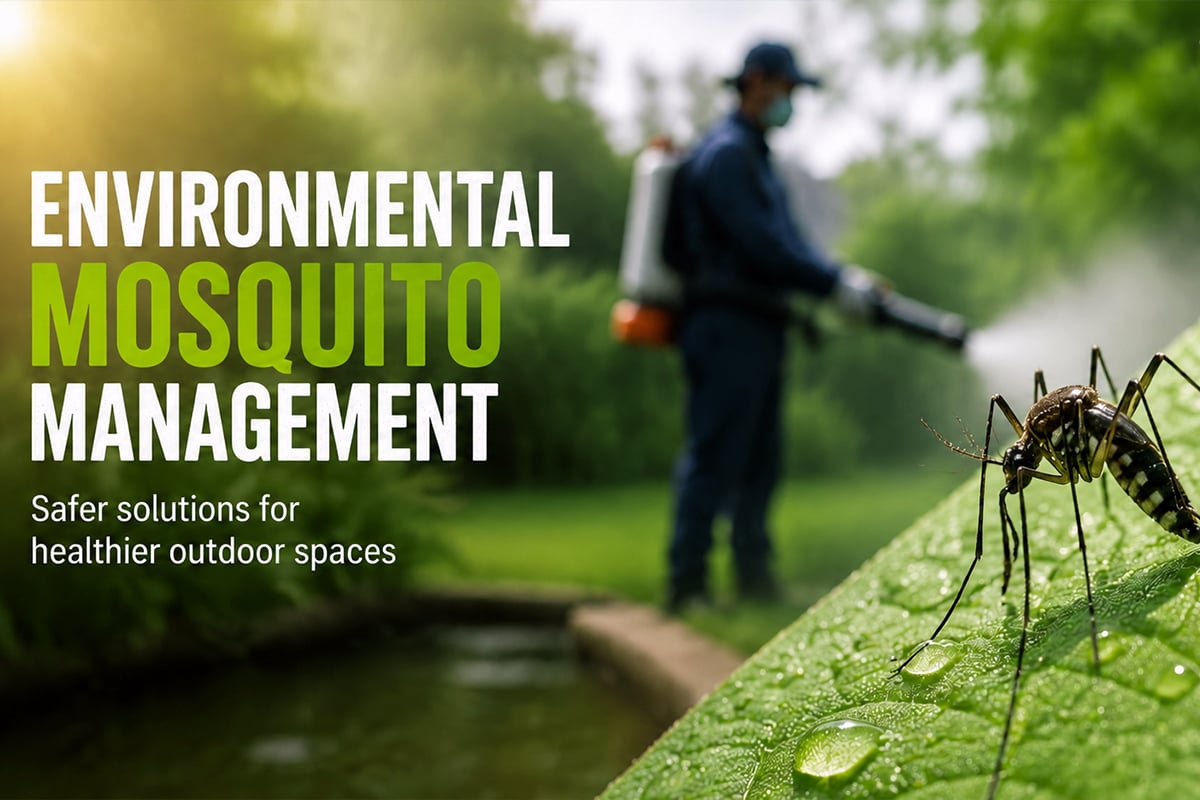
Source Reduction: Eliminating Breeding Sites
Long-term mosquito control begins with removing breeding habitats.
Compared with chemical-only solutions, environmental management offers several advantages:
The key is simple: eliminate the places where mosquitoes reproduce.
02 Integrated Mosquito Management: The Four-Step Strategy
Based on the principle of environmental control, public health experts have developed integrated mosquito management systems built around a four-step prevention framework.
Rather than treating mosquito control as isolated actions, this method approaches prevention as a complete and coordinated system. The strategy combines:
Together, these measures create a comprehensive mosquito prevention network.
Why Integrated Control Works
The strength of the four-step method lies in its systematic and preventive approach.
Instead of focusing only on killing adult mosquitoes, it interrupts the mosquito life cycle at every stage. This significantly reduces mosquito density and lowers the risk of mosquito-borne diseases such as dengue fever, malaria, chikungunya, and West Nile virus.
Public health agencies increasingly recommend integrated mosquito management because it shifts mosquito control from reactive treatment to proactive prevention.
03 The Core Four-Step Mosquito Prevention System
Integrated mosquito control can be adapted for different environments, including communities, commercial spaces, and residential homes.
Below are two commonly used practical approaches.
Community-Based Integrated Mosquito Control
This method emphasizes full-process management through four coordinated steps:
1. Inspect
Identify mosquito resting areas and breeding sources.
2. Prevent
Prevent mosquito entry and reduce environmental conditions favorable to breeding.
3. Clean
Remove food sources, waste, and standing water.
4. Treat
Apply targeted mosquito control measures only when necessary.
The core principle is prevention first, treatment second.
Practical Household Mosquito Prevention Method
For residential environments, a simplified mosquito prevention approach is often recommended.
Turn over and remove unused containers that collect rainwater.
Empty standing water from flower pot trays, buckets, and storage containers.
Seal or cover water storage containers tightly.
Clean leaves, garbage, clogged drains, and other areas where water may accumulate.
This method is easy to follow consistently and highly effective for routine household mosquito prevention.
Common Mosquito Breeding Sites You Should Never Ignore
Successful mosquito control depends on identifying hidden breeding locations.
High-risk mosquito breeding areas include: discarded tires, flower pot trays, water storage containers, tree holes, bamboo sections, construction depressions, clogged drainage systems, outdoor waste containers, basement moisture areas.
Even small amounts of stagnant water can become mosquito breeding sites.
Why Winter Mosquito Prevention Matters
Mosquito control should not stop during colder seasons.
When adult mosquitoes disappear in winter, mosquito eggs may still survive in hidden damp locations such as: flower pot bases, unused tires, basement corners, outdoor containers, drainage systems. These dormant eggs can remain viable until warmer temperatures and water return in spring.
By reducing breeding sources during winter, mosquito populations can be significantly reduced before peak mosquito season begins.
04 Final Thoughts
Effective mosquito control is not about spraying more chemicals — it is about controlling the environment mosquitoes depend on to survive.
Integrated mosquito management combines prevention, sanitation, habitat reduction, and targeted treatment into a sustainable long-term strategy. Whether for homes, communities, commercial facilities, or public spaces, the most successful mosquito control programs always begin with one principle:
Eliminate the breeding source before mosquitoes become a larger problem.
By regularly removing stagnant water from containers, drains and green spaces, we cut off their reproduction cycle at the root. Safe, low-toxic treatments only serve as supplementary measures instead of core solutions, minimizing chemical pollution while delivering stable, lasting anti-mosquito effects.

SHANDONG JIE BAO BIOTECHNOLOGY CO.,LTD provides professional OEM/ODM pest control solutions for global distributors and PCO companies. 25+ years’ expertise, 100+ formulations, ISO 9001-certified. Request custom insecticide solutions today.
West of West Latitude Road, Yong'an Town, Kenli District, Dongying City, Shandong Province, China
Copyright © 2026 by SHANDONG JIE BAO BIOTECHNOLOGY CO.,LTD Privacy Policy

 EN
EN


 Hot News